For Monserrat, July 1968
Abstract
Im Zusammenhang mit der Uraufführung von Kreneks „Proprium für Mariae Geburt“, op. 202 am 22. August 1968 stehen Kreneks Überlegungen zum gespannten Verhältnis der ästhetischen Entwicklung einer Neuen Musik zu ihrer Verwendung in zeitgenössischer Kirchenmusik. In seinem Vergleich mit der einigermaßen akzeptierten modernen Architektur für Sakralbauten geht er auf den Gewöhnungseffekt ein, auf den die dauerhaft in der öffentlichen, alltäglichen Wahrnehmung präsenten modernen Kirchen vertrauen können – im Gegensatz zu den meist nur einmal gespielten Versuchen von moderner Kirchenmusik. Außerdem verweist er auf die Schwierigkeiten durch die komplexen musikalischen Strukturen Neuer Musik, die sich einerseits in den akustischen Gegebenheiten vieler Kirchen verlieren würden, als auch den Laien-Sänger:innen nicht überwindbare Schwierigkeiten bereiten.
Kreneks kurzer Text wurde auch in einer spanischen Übersetzung der Ersteinspielung des Werks auf Schallplatte verwendet.
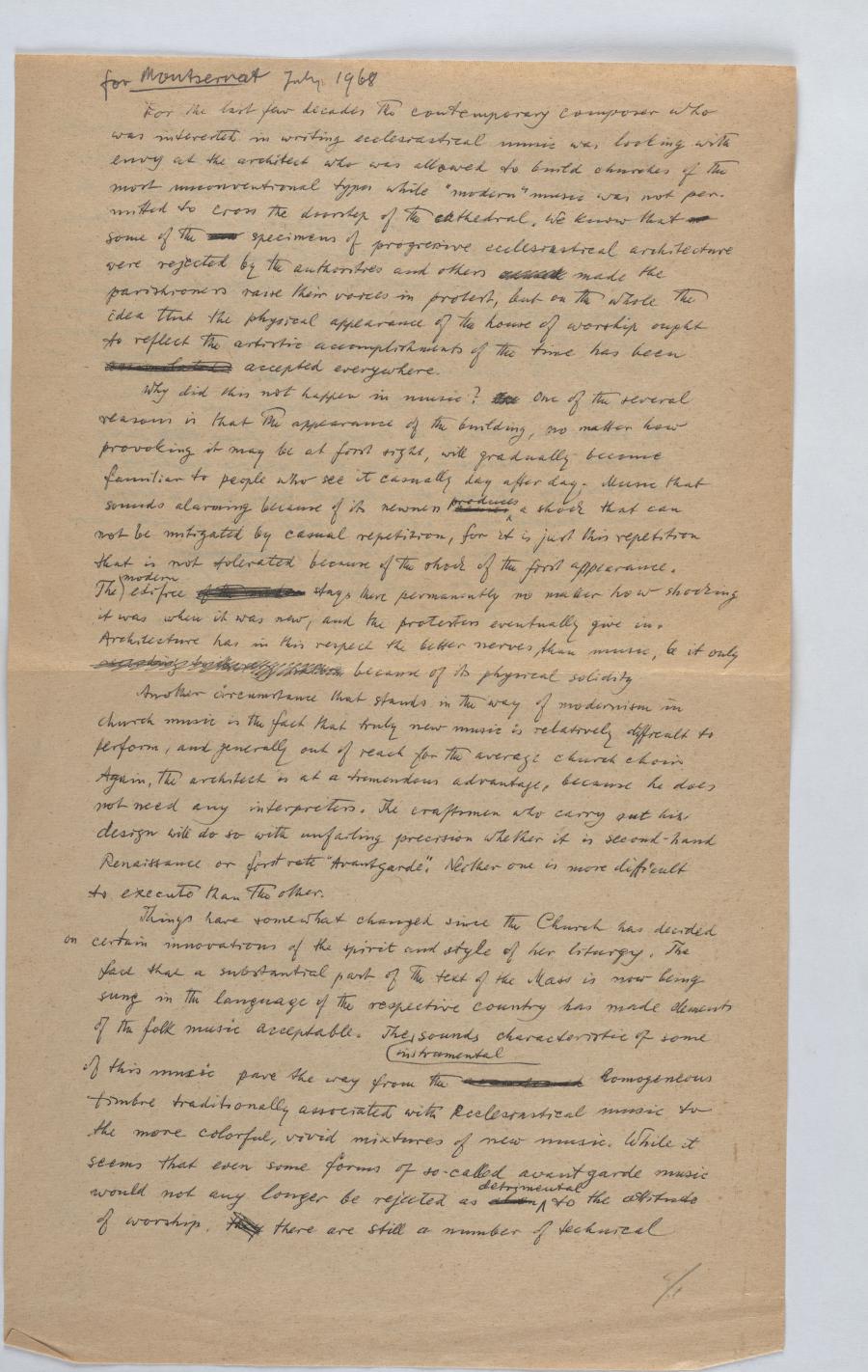
July 1968Montserrat
For the last few decades the contemporary composer who
was interestet in writing ecclesiastical music was looking with
envy at the architect who was allowed to build churches of the
most unconventional types while "modern" music was not per-
mitted to cross the doorstep of the cathedral. We know that new specimens of progressive ecclesiastical architecture
were rejected by the authorities and others
Why did this not happen in music? causes of the modern
Another circumstance that stands in the way of modernism in church music is the fact that truly new music is relatively difficult to perform, and generally out of reach for the average church choir. Again, the architect is at a tremendous advantage, because he does not need any interpreters. The craftsmen who carry out his design will do so with unfailing precision whether it is second-hand Renaissance or first rate "Avantgarde". Neither one is more difficult to execute than the other.
Things have somewhat changed since the Church has decided
on certain innovations of the spirit and style of her liturgy. The
fact that a substantial part of the text of the Mass is now being
sung in the language of the respective country has made elements
of the folk music acceptable. alien
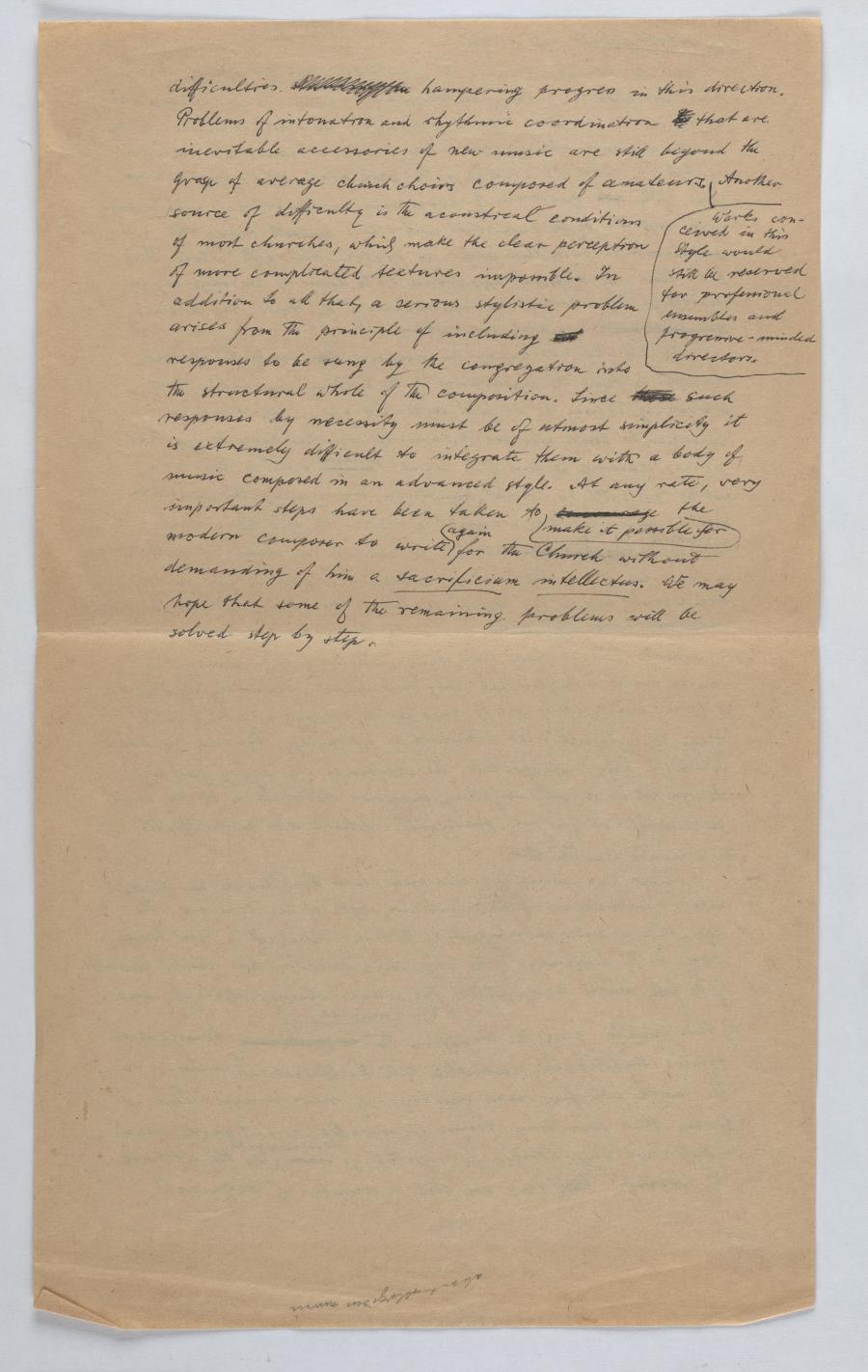
difficulties standing in hampering progress in this direction.
Problems of intonation and rhythmic coordination thesacrificium intellectus. We may
hope that some of the remaining problem will be
solved step by step.
